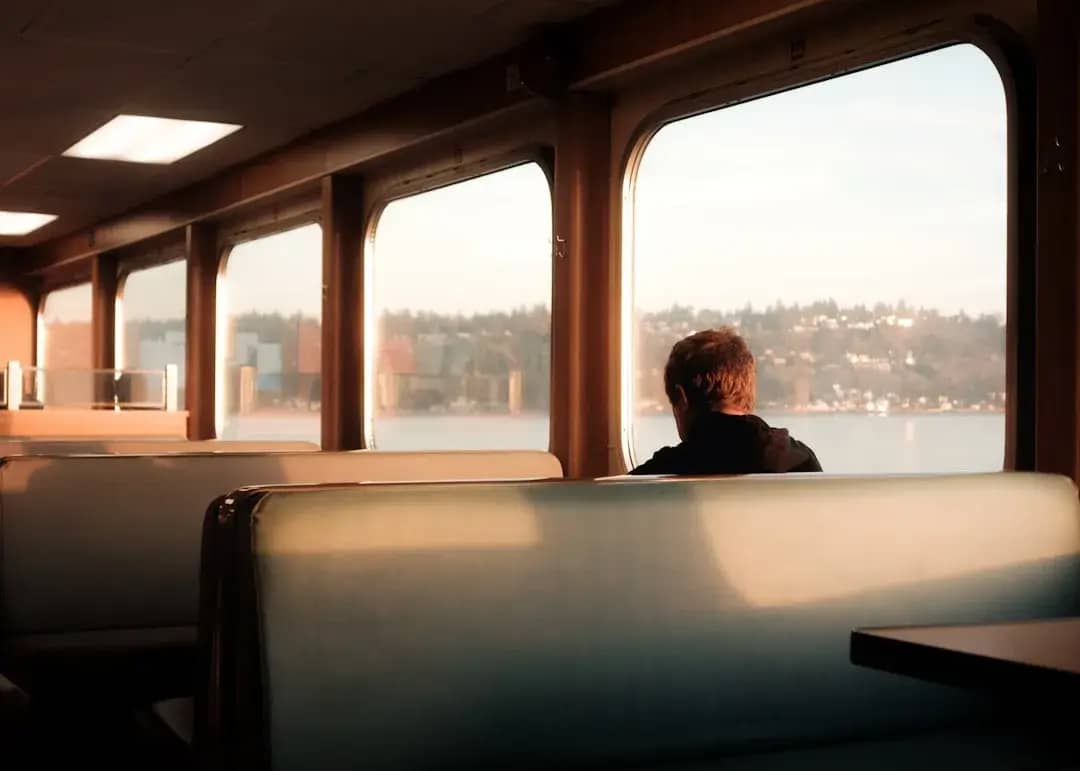
Chosen Poverty
Explore the paradox of financial restraint as a path to invulnerability. Discover how reducing human entanglements can preserve capital but may lead to a life absent of witness. Examine the blind spot in financial calculations that ignores the cost of human connection.
The compounding of restraint is mathematically identical to the compounding of indulgence. It just runs in the opposite direction, and consumer culture has spent sixty years ensuring you never do the arithmetic. None of this is secret. The information has always been available. The question worth sitting with is why almost nobody acts on it.
The answer is not stupidity. The people spending their way into zero net worth are not failing to understand compound interest. They're making a different calculation , one the financial planning industry refuses to acknowledge because acknowledging it would collapse the entire moral architecture of frugality as virtue. The calculation is this: connection costs money. Every category of human expenditure maps almost perfectly onto a category of human entanglement. The car is mobility and belonging. The bottle is the loosened conversation that doesn't happen sober. The family is a financial liability , and also the only people who will remember your face when you no longer can. Eliminate the expenditure and you eliminate the exposure. Both disappear together.
The math works. What it cannot tell you is what the math is solving for , and that gap is not a flaw in the calculation. It is the calculation's blind spot, which is a different thing entirely. Every coherent system has one. The question is whether you see it before or after you've built your life inside it.
The stoics called this apatheia , not indifference as a mood, but as a structural achievement. The man who has systematically reduced his needs has also reduced the surface area through which the world can wound him. Marcus Aurelius was not recommending this as an aesthetic. He was describing a defensive architecture. And the architecture holds , it produces exactly what it promises, and what it promises is a specific kind of invulnerability that is also, by construction, a specific kind of absence. They called it the price of freedom. They paid it, and wrote honestly about what it cost them, which is why their letters still feel like confessions.
What sits unresolved at the center of the spreadsheet: you can calculate the savings from not owning a car, not buying rounds, not forming a family. You cannot calculate the cost of no witness. Not loneliness as a mood , as a structural outcome of a life optimized against every form of human financial exposure. The liability and the testimony vanish together. The market has always known that love is not outside it. We collectively agree not to say this out loud because the moment you do, the choice stops looking like discipline and starts looking like a trade. A rational trade, maybe. A trade with a coherent internal logic. But a trade , which means something was given, not just saved.
The man who arrives at seventy with his capital intact and his solitude intact has not failed. He has succeeded at exactly what he designed his life to do. That is what makes the question so resistant to any comfortable answer: the system worked. And the system working is the most precise description of what was lost.
Whispers live here
Words linger longer when they come from the heart.