L'histoire de mon peuple est triste
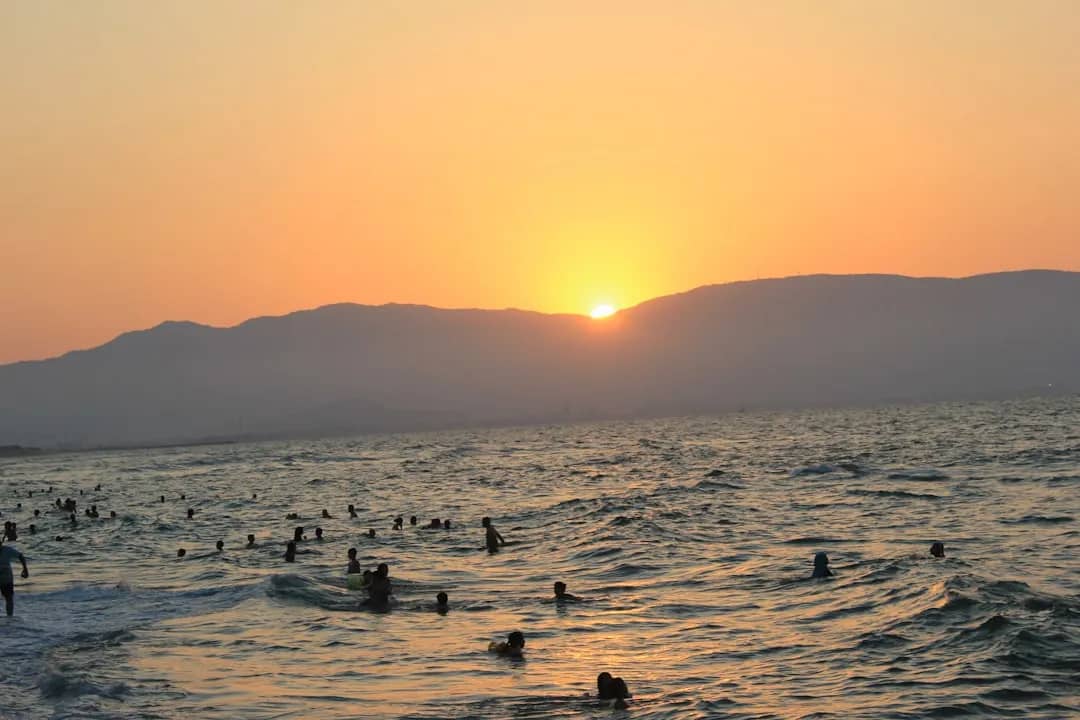
In Algiers, as dusk approaches, the bay mirrors the sepia tones of an old photo, evoking feelings beyond anger or pride. This city, a testament to civilizations buried, tells the story of a people repeatedly interrupted. Each era, from the Romans to the French, left its mark, shaping a narrative where resilience was forged in chaos and hope often deferred.
There is an hour in Algiers, just before the light goes, when the whole bay turns the color of an old photograph, and standing there I feel something that has no proper name in any of the four languages I carry. Not anger. Not pride. Something closer to the ache you feel reading a letter from someone long dead, written in a hand you recognize but to a person you've never quite managed to become. The city below me has buried more civilizations than most countries have ever built, and I think the sadness Booba named in four words is simply this, a people who have spent two thousand years being interrupted mid-sentence.
Numidia had kings once, and altars, and a language carved into stone that we can still partly read and mostly cannot. It barely had time to become anything more than a promise before Rome arrived and decided this coast was a granary, a place that fed an empire's hunger without ever being asked whether it wanted to. The Vandals came after, indifferent conquerors passing through on their way to somewhere else, and then Byzantium, briefly, administratively, the way a landlord visits a property he doesn't love. Then the Arab conquests, which gave us a language and a faith that became truly ours, perhaps the only inheritance from those centuries that we chose rather than survived. And still the rhythm continued underneath. Something forms. Something arrives to take it. The cycle does not pause to let you mourn between turns.
By the time the Ottomans built their regency here, ruling through deys and corsairs who terrorized the Mediterranean's commerce, we had already become extraordinary at a particular kind of competence, the competence of those who know how to extract value from chaos rather than cultivate it from peace. We were among the finest sailors and raiders the sea had ever produced. I used to think that was a point of pride, and some days it still is. But I have come to suspect it was also a quiet form of grief, the genius of a people who had simply never been left alone long enough to discover what they might have built instead, if building had ever been the assignment history gave them.
Then France, for a hundred and thirty-two years, and there are no clean words for what that century did to a people's sense of their own continuity. It is not only the land, or the dead, though there were so many dead. It is the specific theft of ordinary time, the decades a nation needs simply to make small mistakes and fix them without consequence, to argue with itself in peace, to forget what occupation feels like long enough to remember what hope does. We were not given those decades. We were given resistance instead, and we became magnificent at it, the way a body in constant danger becomes magnificent at vigilance, at the cost of ever fully resting.
Independence in 1962 felt, for one unbearable, beautiful moment, like the sentence might finally finish.
But history is not only what happens to a people. Eventually it becomes what a people does with what happened to them. Some of the doors that closed on us from the outside, we rebuilt ourselves from the inside, not because Algerians are uniquely corrupt or uniquely flawed, but because every wound develops scar tissue, and nations develop it too. The tragedy was not that bureaucracy outlived independence. The tragedy was that, in ways too subtle to notice while they were happening, we began to inherit the habits of the very things we had spent generations resisting. The mistrust the colonizer planted between us and the state became, slowly, a mistrust we planted between ourselves. The suspicion that competence draws envy rather than reward. The quiet understanding that the man who waits patiently in line is a fool, and the one who knows someone is simply being realistic. We did not invent corruption. We inherited its architecture and then, grieving and exhausted, furnished a few of the rooms ourselves.
You see it at eight in the morning outside a municipal office in any city in the country. Fifty people standing for a document that should take five minutes to print. Engineers, retired schoolteachers, a young mother with a sleeping child against her shoulder, a man who has taken the morning off work for the third time this month for the same piece of paper. Nobody shouts anymore. They already know how the story ends, and there is something almost peaceful, almost devastating, in how well they know it. You see it again in the brightest student in the building, the one everyone agreed would do something remarkable, spending his evenings studying German instead, not out of betrayal, but because he has done the arithmetic on how many more interruptions a single life can absorb before it runs out of years.
This is the part that outsiders rarely grasp, because they read our history as a sequence of political failures, when it has always, underneath, been something closer to a long bereavement, now partly self-administered. The tragedy of Algeria is not what it became. The tragedy is how many times it almost became something extraordinary, from the outside and then from within, and was not permitted, by history first and later by habit, to find out what that would have looked like. Numidia almost. The regency almost. The republic, in its early fevered years, almost. Each near-arrival lives somewhere inside us, not as a memory exactly, because most of us were not alive for them, but as something passed down in the blood the way certain families pass down a particular silence at the dinner table, unexplained but unmistakably present.
I think of my grandfather, who fought for a country he believed in completely and did not live to see finished, and I think of the millions scattered now across Marseille and Montreal and the Gulf, each one carrying that same unfinished blueprint folded somewhere inside them, the precise shape of what this place could have been by now if history had stepped back, and if we had then stepped forward instead of repeating, in smaller rooms, what had once been done to us in larger ones. We are not naive about our own potential. That is the cruelest part. We know exactly what we were capable of, with a clarity that almost amounts to cruelty, because knowing does nothing to close the gap between the country that exists and the one we have been picturing since before any of us were born.
The sadness of my people was never that we lacked talent. It was that every generation inherited a fight before it inherited a future, and somewhere in all that inheriting, the simple, ordinary right to just begin, undisturbed by history or by ourselves, kept slipping one generation further down the line, always close enough to see, never quite close enough to hold.
Whispers live here
Words linger longer when they come from the heart.