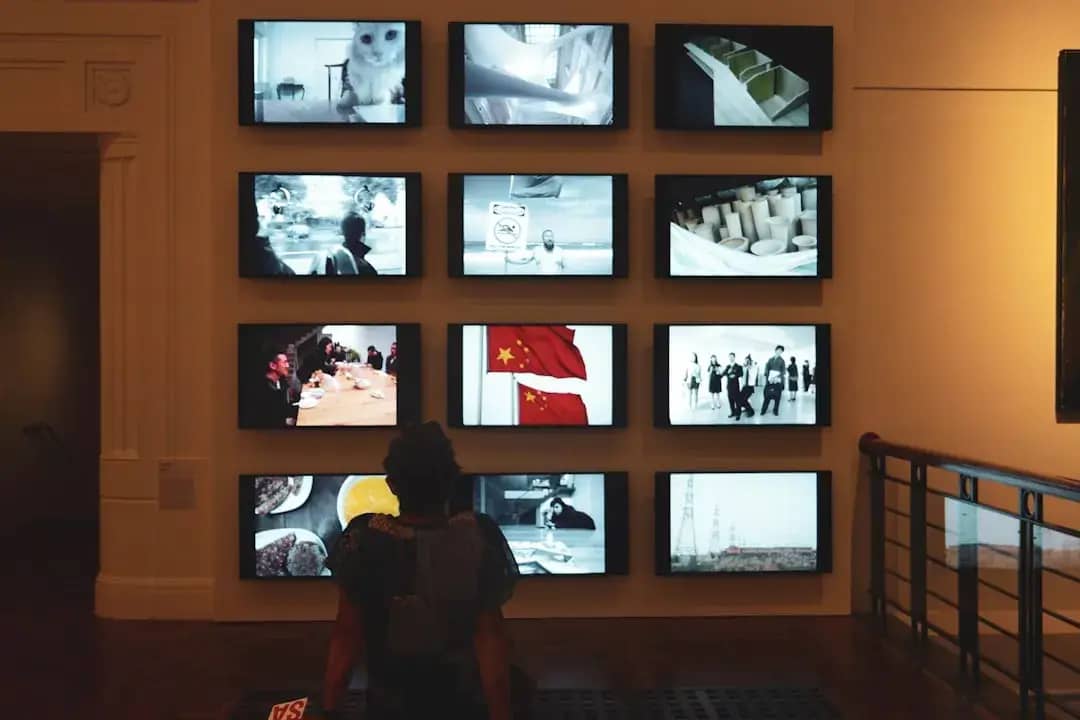
The Abandonment
The truth did not disappear. It became uncompetitive. After spending years creating long-form analysis in an ecosystem optimized for certainty, speed, and emotional resolution, I started noticing something uncomfortable, people rarely reject the truth because they hate it. More often, they abandon it because it is slower, messier, and less satisfying than the alternatives.
Nobody banned the truth. That is the part that should disturb you most.
There was no decree, no burning of libraries, no single moment of rupture you could point to and say: here is where it ended. The truth did not disappear because power crushed it, though power has always tried. It disappeared because it became, in the precise economic sense of the word, unmarketable. It generates insufficient attention. It does not spike dopamine at the rate required to justify the infrastructure built around its distribution. It loses, consistently and measurably, to a video of animated fruit characters committing adultery. The algorithm did not choose this. The algorithm reflected it. That is a far more uncomfortable sentence.
What we are living through is not censorship. It is abandonment. Voluntary, distributed, individually rational, collectively catastrophic abandonment.
I published a video last year that took three weeks to research. A conflict in the Gulf, sources cross-checked, timeline reconstructed, no side favored. Eighteen minutes long. I knew eighteen minutes was already a compromise, the real complexity required forty. I published it anyway. It reached 1,400 views over the following month, most of them in the first 48 hours, after which the algorithm decided it had exhausted its audience and stopped distributing it entirely. The same week, a channel I follow posted a 90-second video making a prediction about the same conflict that was not only wrong but demonstrably fabricated. It reached 600,000 views in four days. I watched the counter in real time, the way you watch a fever climb. The prediction was wrong. The fever kept climbing. Nobody came back to note the discrepancy, because by the time the discrepancy became visible, the feed had moved on to something else.
That is not an anecdote about algorithms. That is a description of the current price of honesty.
The attention economy is not a metaphor. It is a market with a clearing price, and truth has been priced out of it. Shock trades at a premium. Outrage compounds. Narrative coherence,the kind that requires three minutes of sustained concentration and tolerates ambiguity,produces engagement metrics that no advertiser will pay to reach. So the infrastructure that once carried information now carries something else: the sensation of information, stripped of its epistemological content, optimized for the neurological response it produces rather than the reality it describes. You feel informed. The feeling is the product.
States understood this before media theorists did. The old control was blunt,the arrested journalist, the confiscated camera. The new control is more elegant: not preventing images from existing, but ensuring that the volume of competing images is so high that no single truth can accumulate enough attention to become consequential. The news cycle is not an accident of media economics. It is a structural mechanism for limiting the half-life of inconvenient facts.
I decided early on to simply describe what I observe. Not to perform outrage. Not to construct a narrative that flatters the audience's existing convictions. Not to deliver the emotional resolution that the format demands. Just to say what appears to be true, with the caveats that intellectual honesty requires. The result is a channel that does not grow. This is not a complaint. It is a data point.
What I find genuinely strange is that the audience I lose is not hostile. They don't disagree with what I say. They leave because the pace is wrong. A brain trained on dopamine spikes reads the absence of a spike as the absence of content. Nuance registers as evasion. A sentence that ends with "the situation is genuinely unclear" performs worse, by every metric the platform measures, than a sentence that ends with a number, a villain, or a prediction. The platform does not reward honesty. It rewards the feeling of resolution.
And so a new condition has emerged,what theorists call post-truth but what I would describe more precisely as post-consequence: a state in which the relationship between a claim and the reality it describes has become optional, because the social and economic cost of making false claims has collapsed almost entirely. The influencer who told you the Dubai real estate market was the opportunity of the century will not be held accountable when the correction arrives, because the audience will already be somewhere else. The architecture of accountability requires memory. The feed is structurally amnesiac.
Truth has a companion problem that its defenders rarely acknowledge: it is slow. A conflict that has been building for forty years cannot be understood in a format optimized for thirty seconds. The epistemically honest position is almost always the less legible one. And legibility is what circulates.
What I cannot fully resolve is my own position in this. I criticize the audience for choosing comfort, but I also understand the choice. The world is genuinely overwhelming. The information is genuinely excessive. The comfort of a simplified narrative is not stupidity,it is a coping mechanism for a volume of complexity that no human nervous system was built to process continuously. I feel it myself, the pull toward the cleaner story, the firmer conclusion, the version that doesn't require holding five contradictions simultaneously. The difference between me and the channels that are growing is not that I am immune to that pull. It is only that I have decided to resist it, which is a decision that costs something, and the cost is legible in the metrics.
A civilization that abandons truth does not do so in a dramatic gesture. It does so the way most important abandonments happen: gradually, incrementally, one small preference at a time, until the accumulation becomes a condition so ambient that nobody can identify the moment they chose to leave.
Including, sometimes, me.
Whispers live here
Words linger longer when they come from the heart.