Surrender Tax
This piece explores what it means to be open to life's unpredictability, and the societal pressures that demand we close ourselves off. Into the beauty and challenges of remaining emotionally porous in a world that often values efficiency over depth.
There is a kind of person who cannot watch snow fall without losing themselves in it. I know this because I am that person, and I spent years not knowing whether to be grateful for it or quietly ruined by it.
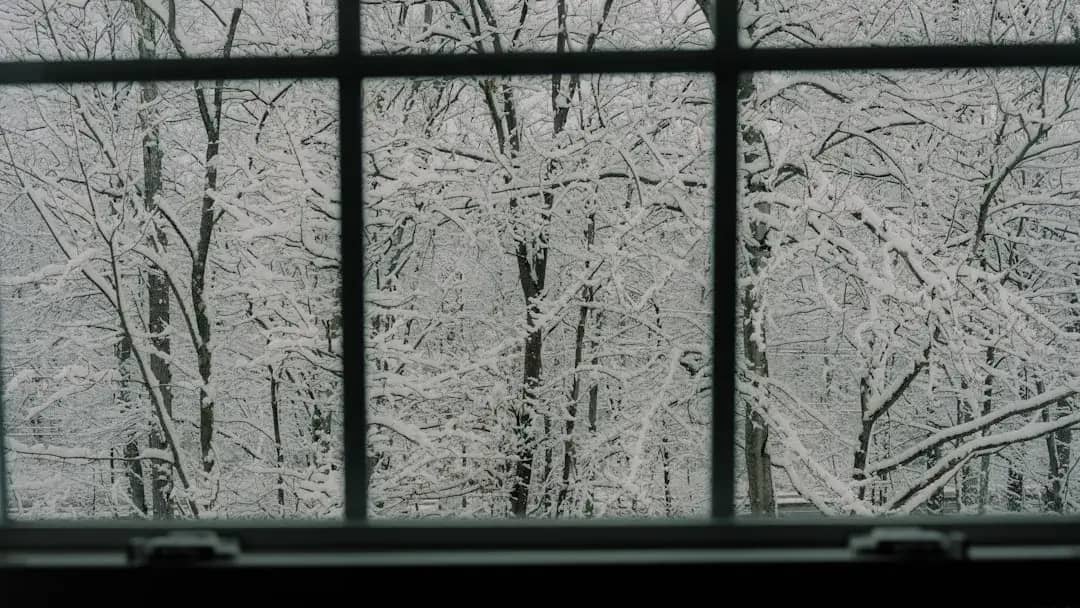
The snow doesn't ask permission. It arrives and the mind goes horizontal, pulled out of itself toward something with no name and no need for one. I was nine years old, sitting in a classroom that had ceased to exist for me, watching fat flakes move sideways past the window with a patience that made the lesson behind me feel like noise from another century. I pointed to the boy sitting next to me. He looked. And I watched the same thing happen to him, the small loosening, the moment the face goes elsewhere, and for reasons I couldn't have named then, that was the most consoling thing I had ever seen. Not because I'd shared something beautiful. Because I'd confirmed that some experiences cannot be refused. They happen to you, or they don't, and nothing about your preparation or your intentions changes which one you are.
What no one tells you about that kind of openness is the bill it runs up over time. The gate that lets the snow in does not close selectively. Joy and devastation share the same entrance, and neither knocks. I have known men who solved this problem the only way it can actually be solved, they sealed the gate. Not dramatically, not out of cowardice, methodically, the way you stop a leak by understanding exactly where the water enters. They are not lesser people. They are, in most measurable respects, more functional people. And when I was younger I judged them for it with the self-righteousness of someone who believed his own porousness was a form of courage, when the honest version was simpler, I didn't have the option. My nervous system was not consulted when it decided to remain permanently, constitutionally open to everything. Calling that a choice would be like a drowning man claiming he chose the ocean.
The architecture of this is not psychological. It is civilizational, and it has been for centuries. Every system that has ever organized human beings at scale has had to reckon with the porous ones, the people who resonate too easily, who cannot be made to optimize when the light is doing something extraordinary outside the window. The historical record is unambiguous on what happens to them, they are either put to use as artists and prophets, or they are medicated, institutionalized, or simply exhausted into compliance. The fully open person is, from the perspective of any apparatus that requires predictable units of output, a sustained operational problem.
What is new, and this is the part that should be more disturbing than it appears, is that the system has found a way to sell the problem back to the people who have it. The hunger for resonance, for that obliteration of distance between self and world, has been packaged into a market. Retreats. Breathwork. Immersive experiences at prices that exclude the very conditions, precarity, helplessness, genuine unknowing, that make real resonance possible. The simulation is designed to feel like surrender while keeping you in total control throughout. You can close the app. You cannot close the blizzard. That distinction is the entire point, and it is the distinction the market cannot afford to preserve.
The open life is not a lifestyle. It is a condition with costs that compound. The man who remains porous carries the joy and the devastation as a single weight, they do not separate, they cannot be taken individually, you do not get to order the joy without accepting delivery of everything else. I have sat with this long enough to stop pretending there is a resolution. The closed life leaves its own marks, the man who kept the gate shut dies wondering what was on the other side, and that wondering settles into the body over decades, quiet and permanent, the way scar tissue settles. The man who left it open sometimes wants, with genuine and specific desperation, to have been the other man. Both of these things are true at the same time and neither cancels the other.
The snow falls or it doesn't. You are taken by it or you aren't.
The only lie available is the one that says you had a say in the matter.
Whispers live here
Words linger longer when they come from the heart.