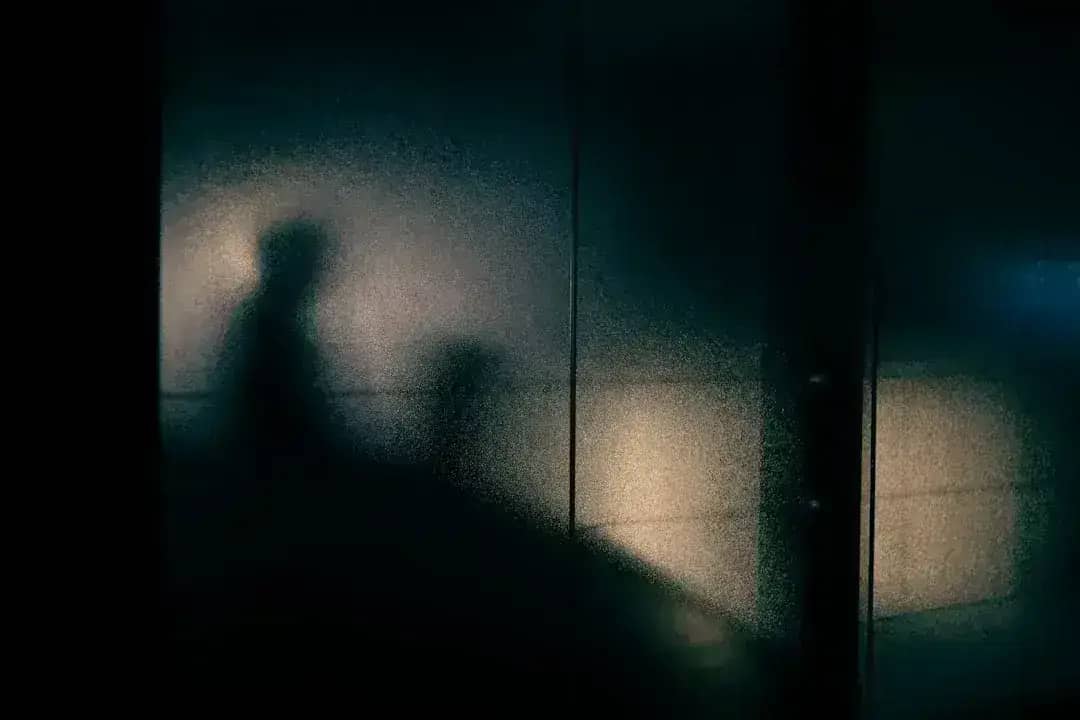
Dark Architecture
A meditation on those rare people who shift entire rooms without speaking, not through charm, but through uncontrollable truth. On hyper-empathy as survival strategy, brains wired to detect every microexpression, and why they're loved by technical teams but hated behind the scenes. They don't project light. They project what no one asked to see.
There are people whose presence is painful.
Not because of what they say, but because of what they reveal. Because when they enter a room, something shifts. Confident people falter, cynics retreat, and hypocrites are unwittingly exposed. They do nothing. They simply exist. But simply existing, in certain bodies, is already too much.
I've seen how a leader like that transforms the atmosphere without lifting a finger. No strategic smile, no relational chatter, no purposeful slide. Just that charged, intense presence. As if their very existence carried with it a mirror no one asked to look into.
They aren't necessarily loved. They are often feared. Because they make visible what others have trained themselves to hide: doubts, contradictions, hunger. These are the leaders who don't talk about vision, but whose gaze makes you re-examine your own. They make you uncomfortable without insulting you. They make you uncomfortable precisely because they don't need to prove anything.
Science is trying to decipher them. Brain scans show rampant activity in the anterior insula, the region that connects us to the emotional state of others. These are brains wired to detect the slightest fluctuation in a voice, a pause, a glance. But also to reflect it. They are mirrors with skin.
But what price does a mirror pay that can never be turned off?
They call it hyper-empathy. An elegant way of saying they feel too much. That their bodies process every tension in the room, every other person's microexpression, as if it were their own. Many end up exhausted. They're diagnosed with "emotional exhaustion ," but it's really something else: social overload. They're overexposed. And nobody notices, because it's assumed that the strong don't break.
They weren't trained to be charismatic. They adapted. Out of necessity. Many come from environments where reading others was a matter of survival: tense homes, dangerous streets, cultures where a misinterpreted gesture could be costly. Their presence isn't a gift. It's a scar.
And that makes it all the more unsettling. Because they don't project light: they project truth. And truth, as we know, is not a welcome asset in any board meeting. They call it "intimidating," but what they really mean is: uncontrollable.
I worked with one of them. Within three days, we already knew who was lying about the data, who was afraid of losing their job, who didn't believe in the strategy. He didn't say a word about it. He just listened. And suddenly, no one could maintain their own narratives. There was something in the way he looked at us that dismantled arguments like houses of cards.
That's why they don't make a career in domestic politics. They can't pretend. That's why they're loved by technical teams and hated by those who build power behind the scenes. They're inconvenient. Because their mere presence undermines the charade.
Many don't go far. Not because they can't, but because they don't want to play the game. Others do. But they arrive alone. Tired. Like lighthouses whose light no longer knows if it guides or burns.
They don't need any more validation. The energy they generate in others is already paid for by their bodies. They dream little. They sleep poorly. They live with the emotional volume of the world constantly on.
Don't admire them. Don't idealize them. Learn to recognize them. And if one enters your room, don't try to impress them. Listen. Because, if you're lucky, that presence will tell you without words what no one else dares.
They are not charismatic leaders. They are human catalysts. And sometimes, what they catalyze… is not well-received.
Whispers live here
Words linger longer when they come from the heart.