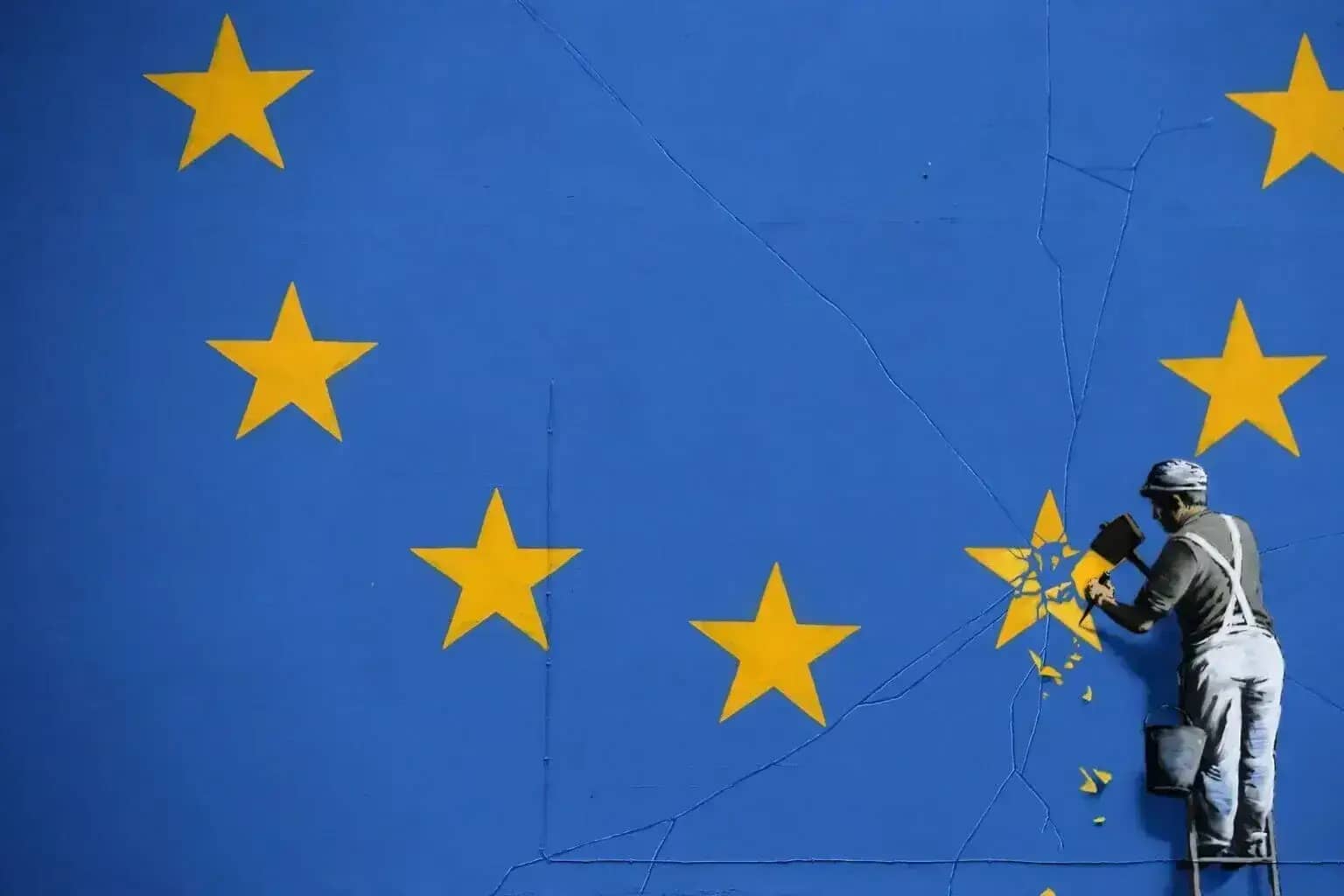
Reality doesn't arrive with fanfare; it slips in quietly through the side door and turns the shelves upside down. The feeling that "everything is falling apart" is less a prophecy than a symptom, a collective vertigo when the geography of power shifts and moral maps become outdated. What is emerging in Europe, and in France as a magnified reflection, is not merely an electoral dispute or a tantrum against Brussels. It is the tension between two fiercely competing loyalties: national belonging, with its promise of control, and financial belonging, with its demand for credibility.
Let me put it bluntly: markets don't vote; they get paid. That's their grammar. And yet, it's also worth dismantling the shadow play that attributes to an omnipotent "they"—invisible bankers, the "globalist class," the men of Davos, or the priests of money—the power to push a button and annihilate a nation. Power exists, of course. But it doesn't resemble an elegant conspiracy; it's more like a web of dependencies, incentives, fears, and contracts that, by design, maximize the continuity of payments. There isn't a single hand; there are many hands with the same pulse.
The idea of seventy-year cycles gains traction, shapes the system, exploits it, causes it to crack, leads to thirty years of chaos, a rinse and repeat, and functions as a pedagogical narrative. It helps us understand that hegemony is not eternal. But it risks dulling our perception of reality, transforming history into a kitchen clock. And history is not a clock; it is an ecosystem. It changes when political blindness, technological innovation, an energy disaster, a doctrinal error, and, underlying it all, an emotional exhaustion of societies converge. It doesn't happen according to a calendar; it happens through accumulation.
France enters this threshold with a double fragility: fiscal and emotional. Fiscally, the equation is simple. The state needs to continuously refinance, roll over old debt, and cover new deficits. Whatever the figure, the volume is sufficient for the risk premium—that difference in return compared to a “safe” asset—to become a vital barometer. When it rises, there are tremors. And the reasons for this rise don't require villains; it's enough to perceive that politics will be unable (or unwilling) to balance the books. The uncertainty isn't ideological; it's accounting-related.
The mechanics are well-known. If fund managers who have been buying a country's debt for years believe the next legislature will question the fiscal path, they sell first and ask questions later. If several do so simultaneously, the price falls, the yield rises, and the mirror shatters. There's no need to "organize" anything: it's enough that each party, for fear of being the last to exit, tries to get out first. It's called coordination by panic. Some give it a face; others, a mathematical model. The result is the same: rising interest rates, more expensive financing, banks vulnerable due to the depreciation of their portfolios, and ordinary citizens watching their mortgages become more expensive as if they'd been invited to a party they didn't want to attend.
Notice the human element: when trading screens turn red, it's not just algorithms that are activated; biographies are activated. Conditional bonuses, careers on the line, reputations that can't withstand another losing quarter. "Avoid the drawdown, protect the mandate." The phrase isn't epic, but it moves mountains. It moves flows. It moves countries.
Greece is often cited as an example of discipline by strangulation. The lesson is there, yes, but it's important to be precise. It was a clash between political sovereignty and the banking sector's membership in a monetary union that delegates power to a non-national central bank. In that context, liquidity becomes a weapon. The narrative of "our credit lines were cut off and we were on our knees in two days" oversimplifies to the point of distortion: there were clumsy negotiations, contradictory promises, design dilemmas, and, of course, fear of a banking collapse that punishes small banks before large ones. An uncomfortable truth: crises in democracies are not defined by heroes, but by the lines at ATMs.
Let's talk about local tools. The so-called "Sapin Law" isn't a master key to shutting down the bond market. Essentially, it's an emergency measure to limit withdrawals from certain instruments, especially life insurance, when a wave of redemptions could force the sale of assets under fire conditions. It's a firewall, not an offensive weapon. It's designed to buy time, which in finance is the only luxury that truly costs money. And yes, opening that umbrella sends a devastating message if misused: "We have no liquidity." The paradox of the firewall is that its very existence can attract fire if communicated clumsily.
The maximalist plan is being examined: leaving the euro. Monetary sovereignty? On paper, recovered. Capacity to devalue to reindustrialize? Perhaps, if energy policy is overhauled, labor markets are reformed, and initial inflation on fixed incomes is tolerated. Risk? Massive: contract conversions, deposit flight upon announcement, the need to impose capital controls to prevent the financial base from fleeing before dawn. This is a decision of economic warfare, not an administrative reform. And the honest question isn't "is it possible?", but "are we willing to pay the cost of the transition without sacrificing the very middle class we claim to protect?" Sovereignty sounds good in rhetoric. But it weighs heavily on the bottom line.
A phrase to remember: identity doesn't pay for coupons. And yet, coupons shape identity. If a country is forced to make abrupt cuts, it does so in things that alter the fabric of daily life: closed hospital hours, fewer scholarships, deteriorating trains, police officers paid late. Sublime debates about geopolitics are reduced to shopping lists. This is how macroeconomics descends to the kitchen of your life, with the electricity bill and the mortgage payment.
Is there "the American hand" pulling all the strings? The United States still sits at the center of the financial system, with its currency as the net and its market as the magnet. For now. The key is not that an office in Manhattan decides to punish Paris, but that the global system recognizes, out of habit and convenience, the dollar as the common language. Changing languages takes generations. And that isn't imposed with speeches; it's imposed with invoiced contracts, with guaranteed logistics, with courts where people want to submit their disputes. A hegemony doesn't fall because the rest of the world detests it; It falls when it offers worse guarantees than its rivals.
The argument about gas and steel, sabotage and pipelines, reveals another trap: the seduction of the clear culprit. When you're out of control, attributing the damage to a single individual offers some comfort. Perhaps one day there will be evidence and names; for now, the only thing that's clear is the effect: Germany lost its energy advantage, France failed to reconfigure its infrastructure in time, European industry suffered greatly, and the political price was paid in protest votes. No one offers compensation for that. The price is paid by the productive monotony of a continent that confused stability with immortality.
So, what is to be done? The temptation for this letter would be to string together heroic advice: “create a task force,” “order the central bank to be patriotic,” “block the markets,” “break the treaties,” “take to the streets.” That kind of theater sounds good in a social gathering. In the real world, there are no shortcuts. Central bank independence is, by design, a defense against the impulse to spend today and pay tomorrow; if you turn it into an extension of government, you gain control now and lose credibility for a decade. Without credibility, the cost of financing devours any project. Good intentions, terrible prices.
There is another, less flashy path: brutal accounting transparency and a fiscal narrative that treats adults like adults. It's not popular because it involves naming the unnamable; demographics don't add up. The promise of increasing pensions in populations that are aging and producing less marginal productivity is arithmetically fragile. It's not a question of fairness, it's a matter of arithmetic. Which doesn't preclude protecting the vulnerable or designing more resilient mixed systems; It does, however, prevent us from continuing to sell a future financed by slogans. A serious country doesn't postpone exams; it passes or fails them.
Take a breath here: politics is also psychology. Some voters aren't voting for a platform; they're voting against humiliation. Against the voice that told them for fifteen years that "there is no alternative," that every local demand was provincial, that all resistance was backward. The reaction isn't just macroeconomic; it's narcissistic. And wounded narcissism gladly pays the price of a bad decision just to finally hear the music it likes. "They're giving us back our country." But the country is also a balance sheet. The new music, if it wants to last, must be tuned with numbers.
Three cutting phrases:
The market doesn't forgive self-deception.
A nation doesn't survive childishness.
Economic freedom without discipline is an expensive fable.
Consider the banks. They say they've fallen fifteen points in two days; it happens sometimes. Not out of malice, but because their assets, especially government debt, lose value when interest rates rise, and their business, which thrives on the yield curve and confidence, is less well-fed in a stormy climate. A frightened banking system retreats, restricts credit, and the productive sector shrinks. Once again, macroeconomics hits the neighborhood: credit for that exciting project is postponed or becomes more expensive. The dream, put on hold. The future, bleaker.
And yes, there may be actors who "push" to make fear educational, to bring voters back to the tepid safety of the center. It's called soft power with teeth: they don't imprison you, they make you more expensive. But make no mistake: this push only works if there was already fragility. No one can tear down a sound wall with a whisper. A whisper tears down cracked walls.
Let's get down to earth, which is where this kind of letter makes sense. Perhaps you don't run a ministry or a fund. You run your own home, your own schedule, your own dignity. In that realm, the question isn't "euro yes or no?", but "what lack of transparency makes me a hostage to anyone?". If all your savings depend on a single public promise, you're exposed. If your entire future hinges on a single political narrative, you're sold out. Diversification isn't financial advice; it's an act of maturity. Not to get rich, but to avoid becoming a disposable element in someone else's script.
Fear mobilizes, but it also dulls the mind.
Cynicism protects, but it sterilizes. Between the two lies the serene courage of those who accept that the world won't be clear in 2030 any more than it was in 1830 or 1930, and that the work of adulthood consists of not surrendering one's mind to the first spell cast. It means rejecting the kitsch of empty sovereignty and the kitsch of infallible technocracy. Both are shortcuts. Both leave you homeless.
Don't misunderstand me: there are legitimate reasons to abhor the current design of Europe, its democratic deficit, its slow problem-solving approach, its rigid regulations that often punish the small player before the cartel. There are also reasons to distrust the international "order" that shields privileges under the guise of efficiency. But from there to the fantasy that all it takes is leaving, closing down, blocking off, and "going back to being ourselves" is twenty years of institutional, industrial, and cultural engineering. Anyone who promises otherwise is lying. Anyone who omits this is governing by fables.
One final thought on authority. France, and this is what makes it great, still has room to reinvent itself with dignity. Its intangible assets, its scientific capacity, its language, its industrial culture, its agriculture, its exportable talent… all of that matters. But all of that becomes financially viable only if the State talks about numbers like an adult and if society decides that prosperity is more important than grievance. Grievance wins elections. Prosperity pays for schools.
You can call it elitism; I call it mental hygiene: prosperous nations treat reality as an unwelcome guest, not an enemy. You offer it a chair, not an altar. You ask it questions, not offer prayers. You set boundaries, you don't write it a poem. “Reality is there,” I said at the beginning. Yes. And it will be there tomorrow too. It doesn't come to destroy you; it comes to remind you of the bill. You can argue the amount. You can't leave the restaurant without paying.
Remember this, it applies to the nation and to your living room: no one who is truly free delegates their destiny to a myth. Neither the myth of the omnipotent market, nor the myth of the self-sufficient nation. Between these two lies the only adult task that deserves respect: building trust with facts, laying bare the numbers, admitting that short-term pleasures are expensive and that discipline is not a neoliberal whim, but the price of making your promises resemble your life.
The final rift is personal: what part of his biography is written out of fear and what part out of conviction? Answering that is worth more than today's stock price. Because, when bonds rise and fall, the only thing that truly matters is whether his word, his own, still holds true. If it does, he will survive any market. If not, no market can save him.