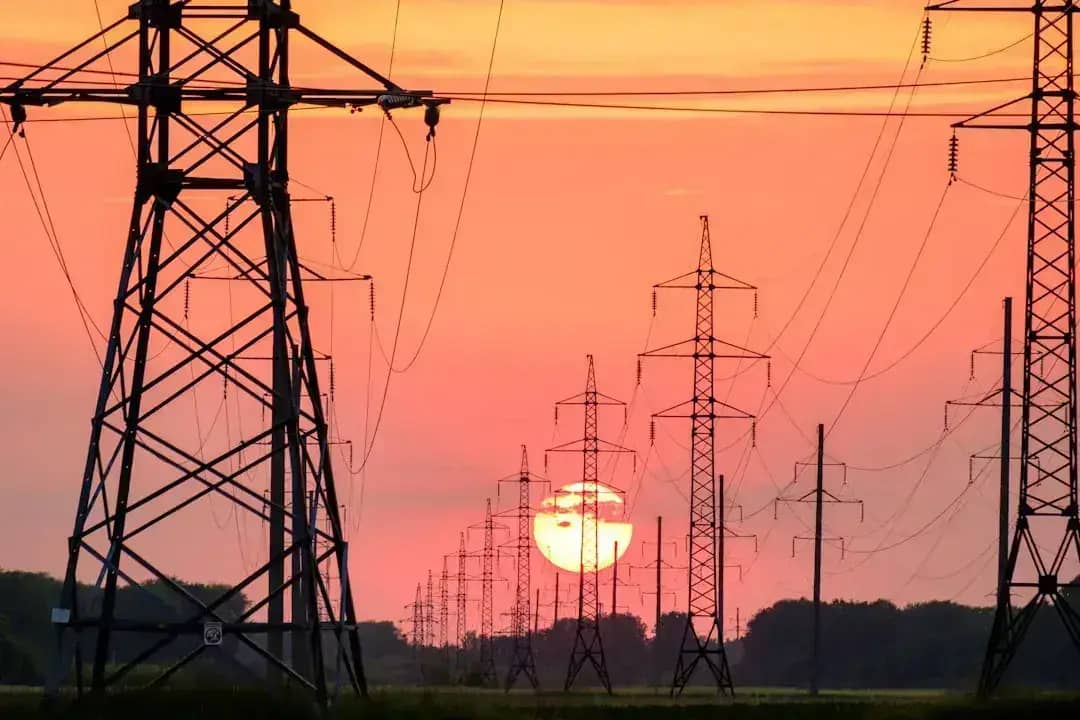
Energy Determines Position
Energy dictates technological growth, China's strategic advantage in energy capacity fuels AI expansion. Observing this shift, the tone is merciless and reflective, questioning Western policies that hinder economic progress. Explore how infrastructure limits and energy policies shape global competitiveness.
You watch the shift happen. The CEO speaks. Five trillion in market value confirms energy advantage. Data centers require power at scale. Infrastructure either exists or it doesn't. The gap widened while policies debated symbolism.
The mechanism was visible. European energy costs exploded. American retail prices spiked. China maintained cheaper access while avoiding carbon restrictions and climate theater. Institutional alignment with policies gutted industrial base. Political entanglements enabled restrictions competitors ignored. Western economies imposed constraints. China didn't. AI infrastructure consumes three to five times standard data center energy. The United States lacks grid capacity for aggressive expansion. Europe has less. China built theirs.
War runs through power grids now. Artificial intelligence dominance follows energy capacity. The participant who controls foundational resources wins shorter timelines. The participant who restricts themselves while competitors operate freely loses ground faster than anticipated.
I've watched this without surprise. Mechanisms were always present. Institutions claiming sustainability priorities deployed restrictions that crippled their own economies. Climate agreements functioned as unilateral constraints. Energy policy became economic drag dressed as progress. The rhetoric never matched structural reality.
The CEO's observation wasn't prediction. It was acknowledgment of current positioning. China's energy advantage enables AI infrastructure expansion. Western economies face grid limitations and regulatory friction. Recovery requires infrastructure buildout. That takes time. Policy reversals face institutional resistance. The timeline tightens while bureaucracies process.
You call it strategic. I call it attention to leverage points. Someone understood energy infrastructure determines technological capacity. Someone else believed frameworks and gestures would produce different results. Cheap energy enables expansion. Expensive energy forces slower growth or contraction.
Institutional capture occurred visibly. Policies deployed that benefited competitors while damaging domestic capacity. European energy destabilized. American costs increased. The data is accessible. The trajectory is observable.
I don't participate in outrage. Outrage changes nothing. Mechanisms continue operating. China built capacity. Western institutions imposed restrictions. The gap exists. Advantages compound when foundational resources diverge.
AI development requires energy at scale. Infrastructure either supports it or creates bottleneck. United States grid faces capacity constraints. Europe has worse positioning. China operates with both energy access and industrial capability. Energy capacity matters, but capital velocity determines how fast capacity becomes operational reality.
Infrastructure projects require extended timelines. Policy reversals face institutional friction. Delay widens gaps when competitors expand during correction periods. China increases capacity while Western economies debate adjustments. The outcome follows structural positioning.
You frame this as constrained. The situation is. European economies cannot rebuild energy infrastructure quickly. American expansion faces regulatory and timeline obstacles. China operates with fewer similar restrictions. Dominance follows mechanical advantage when foundational resources diverge significantly.
But positioning isn't permanent. Systems adapt when pain exceeds tolerance. Deregulation can move fast when crisis forces it. Markets route around bureaucracy when incentives flip hard enough. Private capital doesn't wait for permission indefinitely. The question is whether correction speed matches gap widening speed.
China has advantages. China also has constraints. Debt overhang. Demographic collapse. Capital efficiency problems. Innovation bottlenecks at technological frontier. Energy transport fragility. Internal political risk. The analysis holds if their advantages compound faster than their constraints damage capacity.
The United States isn't Europe. Texas isn't California. Private sector isn't public bureaucracy. Crisis triggers can produce radical policy shifts historically. When systems face existential pressure, adaptation accelerates. Whether that happens fast enough to close energy infrastructure gaps before AI dominance solidifies is the actual question.
For decision makers, the variable that matters now is not intent but execution speed.
The CEO confirmed current positioning. Energy advantage enables AI expansion. Western constraints created disadvantage. The gap exists now. Whether it persists depends on adaptation speed versus advantage compounding rate. Historical precedent shows both outcomes. Systems that correct fast survive. Systems that debate while competitors build don't.
I watch the machinery continue. Institutions process. Policies adjust incrementally. Energy costs persist. Infrastructure gaps remain. China expands. Western economies face correction timeline pressure. The outcome depends on whether crisis produces fast enough deregulation and infrastructure deployment to matter.
The positioning is structural. The advantage is mechanical. The timeline is tight.
Whispers live here
Words linger longer when they come from the heart.